Tuesday, 7 May 2013

Episode 71: Blue Plaques

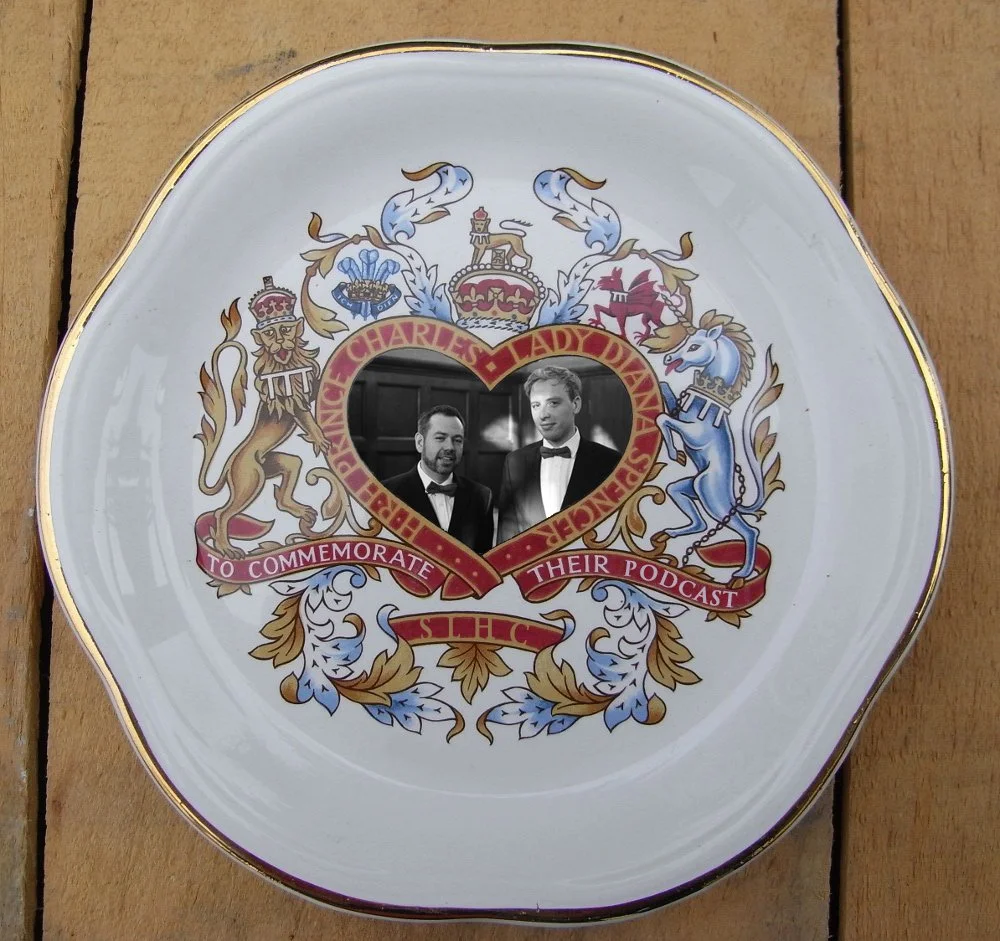
Although there are literally hundreds of plaque schemes across the country, South London Hardcore has decided it needs it's own.
This week we mark significant places in the lives of three-time Oscar-winning actor Daniel Day-Lewis, former Prime Minister John Major and penal transportee Mary Wade.
We also give ourselves one, because if we don't, who will? 


Listen and subscribe on iTunesclick here to download (alternately right-click and save as) or stream below: 


For more photos visit our Flickr page

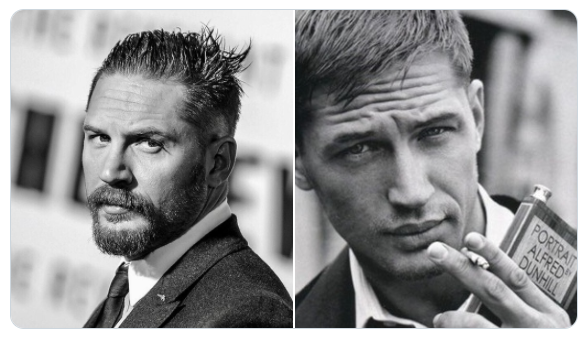
Daniel Day-Lewis (and Cecil Day-Lewis) at 6 Croom's Hill, Greenwich 

  Daniel and Cecil Day-Lewis plaques 

 
John Major on Coldharbour Lane at the corner of Eastlake Road

John Major blue plaque


Mary Wade on undisclosed Southwark wall

Mary Wade blue plaque


South London Hardcore at Musgrove Road in New Cross

South London Hardcore blue plaque


Saturday, 4 May 2013

Danny Williams vs. Mark Potter (2000)


'The Brixton Bomber' Danny Williams showed incredible reserves of courage to fight on with a dislocated shoulder in this bout from the year 2000.
Despite having only one hand to defend himself with and mount his offense Williams still manages to pull out a remarkable victory.

Michael Ayers vs. Wayne Rigby (2000)


Tooting's own Michael Ayers distiguished himself in this bout, refusing to take advantage of an incapacitated opponent and exhorting the referee and opposing corner to end the bout.
Skip through to 6:30 to see this extraordinary moment.

Friday, 3 May 2013

Frank Bruno vs. Mike Tyson (1989)


In 1989 Frank Bruno, fighting out of Wandsworth, faced Mike Tyson for the Undisputed Heavyweight Championship of the World.
Despite being rocked in the opening moments Bruno rallied through the round and shook Tyson with a left hook in the closing moments, echoing Henry Cooper's famous blow on Cassius Clay so many years before.
Unfortunately Bruno's fight continued to echo Cooper's efforts with the fight being stopped in the fifth round in Tyson's favour.

Thursday, 2 May 2013

Don Cockell vs. Rocky Marciano (1955)


Balham's own Don Cockell was British, Commonwealth and European Heavyweight Champion when he faced Rocky Marciano, the World Heavyweight Champion, in San Francisco in 1955.
Cockell went into the fight a 10-1 underdog and was outclassed by Marciano who, nevertheless, paid tribute to Cockell after the fight:

"He's got a lot of guts. I don't think I ever hit anyone else any more often or harder."

Cockell never recovered from this loss and was defeated in his next two fights, surrendering his titles as he did so.
However his final act as boxer was a win.
The Daily Mail had accused him of being unprepared for his last fight and described him as 'overweight and flabby.'
Cockell sued the newspaper, receiving £7,500 damages and his costs.

Tuesday, 30 April 2013

Henry Cooper vs. Cassius Clay (1963)


'Our 'Enry' was born in Lambeth in 1934 and enjoyed his most celebrated moment in a boxing ring when he fought a young Cassius Clay in Wembley Stadium in 1963.
Having prepared for the fight without a trainer few gave Cooper any chance against the phenom from the States.
However Cooper held his own and even managed to knock down Clay when he connected with his trademark left hook, 'Enry's 'Ammer', in the dying seconds of the fourth round.
Clay was saved by the bell and managed to rally later in the fight and get the win.

Dave McCleave and the Union Tavern in Camberwell


Dave McCleave represented Great Britain in the 1932 Olympics and won the British Welterweight title in 1936.
After his retirement from boxing he ran the Union Tavern in Camberwell and maintained a boxing gym in the pub itself.
This clip shows him training the next generation of South London sluggers with some brilliant voice over action.

'Now let's introduce the smallest scrappers we've had on on Pathe Pictorial since the boxing chimps...'

Monday, 29 April 2013

Episode 70: Boxing


This week we look at South London's greatest boxers, from Don Cockell and Henry Cooper, to Frank Bruno and Lloyd Honeyghan, right up to David Haye. 

Boxing fanatic Hassan joins us. 

Listen and subscribe on iTunesclick here to download (alternately right-click and save as) or stream below: 


Monday, 22 April 2013

Episode 69: Martin Cloake


This week we're joined by journalist and Spurs writer Martin Cloake, as we talk about crossing the divide from North London to South London, as well as politics, subcultures and football. 

Listen and subscribe on iTunesclick here to download (alternately right-click and save as) or stream below: 


Sunday, 21 April 2013

Steven is Heathen


Steven is Heathen

This week we talked about David Bowie's career from 1980 to present. Click here to listen

In part one we talked about his career up to 1979. From Brixton to Bromley to Berlin. Click here to listen

Friday, 19 April 2013

The Next Day (2013)

The 8th of January 2013 was David Bowie's 66th birthday.
It was also the day he released 'Where Are We Now?' his, first new material in ten years and announced the pending release of 'The Next Day' which followed on the 8th of March.
The album was incredibly well received and went to #1 in the UK charts, the first Bowie album to do so since 'Black Tie, White Noise' in 1993.

'Hours...' (1999), Heathen (2002) and Reality (2003)

With this set of albums Bowie returned to his rock roots and appeared to be winding down to retirement.
'Hours...' features songs that also appear on the soundtrack for the computer game 'Omikron: The Nomad Soul' which also featured characters based on Bowie and Iman within the game.
One of the songs from the album and the game is 'Seven'.


'Heathen' saw the return of Tony Visconti as producer and featured a few cover versions including a great version of 'Cactus' by The Pixies.


With 'Reality' Bowie appeared to be preparing to retire from performing and recording.
Many of the songs seem to be looking back on his life and career and concern aging, while 'Bring Me The Disco King' really sounds like a man taking his final bow and is the last song on the album.

Black Tie, White Noise (1993)

Following his marriage to Iman Abdulmajid and his time with Tin Machine Bowie's return as a solo artist with 'BlackTie, White Noise' was a marked improvement of his mid-80's output and a sign of an upswing in his musical fortunes.
The highlight of the album is probably 'Pallas Athena', a song Bowie actually wrote for his wedding ceremony.

Thursday, 18 April 2013

The Buddha of Suburbia (1993), Outside (1995) and Earthling (1997)

Each of these projects saw the inquisitive, experimental Bowie that had struggled in the 80's bounce back with a series of innovative albums that tapped into Bowie's fascination with industrial rock and dance music.
'The Buddha of Suburbia' was inspired by the novel of the same name by Hanif Kureishi and came about when Bowie was asked to produce a theme song for the BBC's adaptation of the novel.
The title song was used but Bowie recorded an albums worth of songs that spun out of the book's themes and transpontine setting.
It also featured a couple of instrumental tracks, 'The Mysteries' in particular, that are reminiscent of the soundscapes he collaborated on with Brian Eno in the 'Berlin' period.


Eno himself returns for 'Outside' and brings his Oblique Strategy Cards with him.
An incredibly dense concept album that revolves around the idea of 'Art Murder' it may well be best known for 'The Heart's Filthy Lesson' which played out over the credits of David Fincher's 'Se7en' later in the year.


'Earthling' saw Bowie's fascination with Electronica take form although he eschewed the more familiar route of sampling and synthesizing his music, instead using his band to create the sounds he needed and then manipulating them into recognisable Jungle and Drum 'n Bass shapes.
'Dead Man Walking' is a great example of the evolution of the music on the album, featuring a guitar riff that Jimmy Page taught Bowie in the 60's and Bowie had previously used on the 1970 track 'The Supermen' from 'The Man Who Sold The World.'

Tin Machine (1989) and Tin Machine II (1991)

Following the struggle of his last two albums Bowie looked to take the pressure of expectation from his shoulders by forming Tin Machine, a straight up rock band that would allow him to be part of a unit rather than having to release a new album as a solo artist.
'Tin Machine', the band's eponymous debut was a straightforward rock affair while their follow up 'Tin Machine II' was a bit heavier and more industrial.
Largely the quality of the albums can be gauged by the amount of effort that went into the album titles.
'Goodbye Mr. Ed' is quite interesting. Bowie formed a song around a series of warm up and tuning exercises the band did before recording.